Is Achilles pain limiting your walking, running or sport?
Pain and stiffness at the back of the ankle can make your first steps uncomfortable and reduce your ability to walk uphill, run, jump or push off confidently.
At Benowa Integrated Health, we assess persistent Achilles tendon pain and provide radial shockwave therapy when it is appropriate for your presentation.
Unsure whether to book? Request a No-Charge 10-Minute Call
Benowa, Gold Coast · Initial appointment $132 · No referral required


Does this sound like your Achilles pain?
What Achilles tendinopathy can feel like
Achilles tendinopathy commonly causes pain, stiffness and reduced capacity in the tendon connecting the calf muscles to the heel.
Symptoms can include:
-
Pain or tenderness at the back of the ankle
-
Morning stiffness around the Achilles tendon
-
Pain during the first few steps after resting
-
Discomfort when walking uphill or climbing stairs
-
Pain when running, jumping or pushing off
-
Stiffness or discomfort at the beginning of exercise
-
Pain that settles as you warm up but returns later
-
Reduced calf strength or difficulty performing a heel raise
-
Thickening or localised swelling around the tendon
-
Symptoms after increasing running, walking or sporting activity
These symptoms may be consistent with Achilles tendinopathy, but pain at the back of the ankle can have other causes. An assessment helps identify the likely source and determine whether shockwave therapy is suitable.
What is Achilles tendinopathy?
The Achilles tendon is the strong tendon connecting the calf muscles to the heel bone. It stores and releases energy when you walk, run, jump and rise onto your toes.
Achilles tendinopathy develops when the tendon’s ability to tolerate load is exceeded. It is not necessarily caused by one particular injury. Symptoms may appear gradually after repeated activity or following a rapid change in training, work or daily demands.
Contributing factors can include:
-
A sudden increase in running distance, speed or hills
-
Returning to sport after a break
-
Repeated jumping or sprinting
-
Long periods of walking or standing
-
Changes in footwear or training surface
-
Reduced calf strength or endurance
-
Limited ankle movement
-
Insufficient recovery between demanding activities
-
Certain medical conditions or medications
The combination of factors differs between individuals. The assessment therefore considers more than the painful area alone.
Midportion and insertional Achilles pain
The location of pain matters.
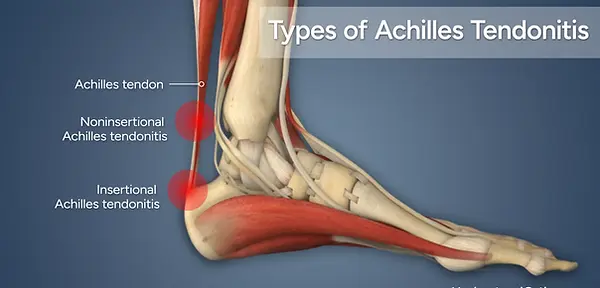
Midportion Achilles tendinopathy generally causes symptoms several centimetres above the heel bone.
Insertional Achilles tendinopathy affects the point where the tendon attaches to the heel. It may be irritated by pressure from footwear or by positions that compress the tendon against the heel bone.
When Achilles pain needs medical attention
“Did your pain begin suddenly?”
Shockwave therapy is not appropriate for a suspected Achilles tendon rupture or other acute injury requiring medical assessment.
Seek prompt medical attention if:
-
Pain started suddenly during running, jumping or pushing off
-
You heard or felt a snap or pop
-
It felt as though someone kicked or struck the back of your leg
-
You developed sudden swelling or bruising
-
You cannot push off normally when walking
-
You cannot rise onto your toes on the affected side
-
There is a noticeable gap or change in the tendon
-
You cannot bear weight normally
-
The area is red, hot or increasingly swollen
-
Pain is accompanied by fever or feeling generally unwell
-
You have an open wound or infection near the tendon
-
You experience significant numbness or loss of sensation
-
Severe pain began after a fall or direct injury
A ruptured Achilles tendon can sometimes be missed because some people remain able to walk. Sudden pain, a popping sensation or a marked loss of push-off strength should be assessed promptly. Healthdirect Australia RACGP clinical review
For emergencies, call Triple Zero on 000. If you are uncertain about the urgency of your symptoms in Queensland, call 13 HEALTH on 13 43 25 84.
How we assess your Achilles pain
Your first appointment
Your appointment begins with a review of your symptoms, health history, activity demands and goals.
Brett may ask about:
-
Where along the tendon you feel pain
-
Whether symptoms began suddenly or gradually
-
Morning and after-rest stiffness
-
Changes in running, sport, work or walking
-
Pain during and after activity
-
Previous tendon or ankle injuries
-
Treatment, exercises or rest already attempted
-
Medical conditions and medications
-
Your footwear and training surfaces
-
The activities you want to return to
The physical assessment may consider:
-
The precise location of pain and tenderness
-
Whether symptoms are midportion or insertional
-
Tendon swelling or thickening
-
Ankle movement
-
Calf strength and endurance
-
Single-leg heel-raise capacity
-
Walking, running or jumping tolerance where appropriate
-
Whether symptoms suggest another tendon, joint, nerve or acute injury
Testing will be selected according to your symptoms and current capacity. You will not be asked to perform an activity that is unsafe or clearly inappropriate.
Is imaging required?
An ultrasound or MRI is not always required for a typical presentation. Imaging may be considered when:
-
A tendon tear or rupture is suspected
-
Symptoms followed a significant injury
-
The presentation is unusual
-
Progress is not occurring as expected
-
Another condition needs to be investigated
If further medical investigation is appropriate, this should occur before shockwave treatment proceeds.

Is radial shockwave therapy suitable?
Radial shockwave therapy may be considered for persistent Achilles tendinopathy following an appropriate assessment.
Suitability depends on:
-
The location and behaviour of your symptoms
-
How long they have been present
-
Whether a rupture or significant tear is suspected
-
Your medical history and medications
-
Previous treatment and rehabilitation
-
Your current activity and load tolerance
-
Relevant contraindications and precautions
-
Your treatment goals
Shockwave therapy is not a substitute for assessment, and treatment cannot be guaranteed before the first appointment.
It should generally form part of a broader management plan rather than being presented as a stand-alone cure. Progressive tendon-loading exercise is an important component of Achilles tendinopathy management and may be recommended according to your capacity. Contemporary clinical guidance supports tendon-loading exercise as central to rehabilitation for midportion Achilles tendinopathy. 2024 clinical practice guideline
What shockwave treatment involves
Radial shockwave therapy uses a handheld applicator to deliver controlled acoustic pressure waves to a selected treatment area.
During an appointment:
-
Your symptoms and response since the previous visit are reviewed.
-
The treatment area is identified.
-
Gel is placed on the skin.
-
The applicator delivers pressure waves to the selected area.
-
Treatment intensity is adjusted according to your presentation and tolerance.
-
Activity and exercise recommendations are reviewed where appropriate.
The treatment may feel uncomfortable or sensitive, particularly over the symptomatic part of the tendon. Intensity can be adjusted during the appointment.
Temporary effects can include:
-
Local soreness
-
Redness
-
Tenderness
-
Mild swelling
-
Temporary aggravation of symptoms
Tell the practitioner if treatment feels unexpectedly painful or if you experience symptoms outside the treated area.
Shockwave therapy and tendon loading
Treatment should address more than pain
The Achilles tendon needs sufficient capacity to manage walking, running, jumping and sporting loads. Reducing discomfort without rebuilding that capacity may not adequately prepare you to return to activity.
Depending on your presentation, your management plan may include:
-
Changes to aggravating activities
-
Gradual calf-strengthening exercises
-
Progressive tendon-loading exercises
-
Advice about running or sporting volume
-
Footwear considerations
-
A staged return to higher-load activity
-
Monitoring symptoms during and after exercise
Complete rest is not always necessary. The aim is usually to find an appropriate level of activity while gradually increasing the tendon’s capacity.
Insertional Achilles pain may require different exercise positions from midportion tendinopathy because compression at the heel can aggravate the tendon insertion. Any exercise advice should therefore be matched to the location of your symptoms.
What results should you expect?
The aim of treatment is to reduce symptoms and improve your capacity for everyday and recreational activity.
Improvement may be gradual and cannot be guaranteed.
Your response can be influenced by:
-
The duration and severity of symptoms
-
Whether pain is midportion or insertional
-
Calf strength and tendon capacity
-
Work, walking and sporting demands
-
Previous injury
-
General health and relevant medications
-
Adherence to activity and exercise recommendations
-
Recovery time between demanding activities
Research concerning shockwave therapy for Achilles tendinopathy is mixed. Some reviews report improvements in pain and function, while other trials have not found meaningful superiority over comparison treatments. Treatment should therefore be offered with realistic expectations and reviewed according to the individual response. 2022 systematic review NICE guidance
The number and frequency of appointments should be determined individually rather than every patient receiving a predetermined package.
Costs and appointment information
Initial Shockwave Assessment & Treatment
Fee: $132
Location: 321 Ashmore Road, Benowa QLD 4217
Referral: Not required
Duration: 30min
Your first appointment includes a health-history review, physical assessment and radial shockwave treatment
when appropriate.
If your presentation indicates a possible rupture, acute injury or another condition requiring investigation, treatment may not proceed. Brett will explain the concern and recommend an appropriate next step.
Frequently asked questions
Is Achilles tendinopathy the same as an Achilles rupture?
No. Tendinopathy usually develops gradually and commonly causes activity-related pain, tenderness and stiffness. A rupture is a partial or complete tear that often occurs suddenly and can cause a pop, swelling and loss of push-off strength.
A suspected rupture needs prompt medical assessment and is not treated with shockwave therapy.
Is the pain at the heel or above it?
Achilles symptoms can occur at the tendon’s attachment to the heel bone or higher in the tendon.
Pain directly at the attachment is commonly called insertional Achilles tendinopathy. Pain several centimetres above the heel is commonly described as midportion Achilles tendinopathy. The distinction can affect management.
Do I need an ultrasound or MRI?
Not everyone with a typical Achilles tendinopathy presentation requires imaging. Imaging may be appropriate when a tear is suspected, symptoms followed a significant injury, the diagnosis is uncertain or progress is not occurring as expected.
Is shockwave therapy painful?
You may feel tapping, pressure or discomfort over the symptomatic area. The intensity can be adjusted according to your tolerance. Temporary soreness or sensitivity can occur afterwards.
Will I receive treatment at my first appointment?
Treatment can generally be provided when your assessment indicates that radial shockwave therapy is appropriate. Treatment cannot be confirmed until acute injury, rupture and other relevant concerns have been considered.
How many sessions will I need?
There is no single number suitable for everyone. Recommendations depend on the type and duration of your symptoms, previous management and response to treatment. Progress should be reviewed throughout care.
How soon should I expect improvement?
Responses vary. Some people notice changes during a course of treatment, while others improve more gradually as their activity and rehabilitation progress. A particular result or recovery timeframe cannot be guaranteed.
Can I exercise during treatment?
Often, yes—but your activity may need to be modified. The appropriate level depends on pain, tendon capacity and the demands of your sport or work.
You may be advised to reduce sprinting, jumping, hills or other high-load activities temporarily while maintaining tolerable activity and progressive strengthening.
Do I need to rest completely?
Complete rest is not always recommended for Achilles tendinopathy. Extended rest can reduce calf and tendon capacity. The goal is generally to modify aggravating loads and progressively rebuild capacity at a tolerable level.
Can shockwave therapy replace exercises?
Shockwave therapy should not be presented as a replacement for appropriate rehabilitation. Progressive tendon-loading exercise is commonly an important part of managing Achilles tendinopathy.
Can I run after treatment?
This depends on your symptoms, current running tolerance and treatment response. Some people can continue modified running, while others may need to temporarily reduce distance, speed, hills or frequency.
Do I need a referral?
No referral is required. If your symptoms need medical investigation or care outside the clinic’s scope, an appropriate referral may be recommended.
What should I bring?
Please bring:
-
Relevant imaging or medical reports
-
A list of medications and medical conditions
-
Details of previous treatment
-
Your usual walking, work or running footwear if relevant
-
Information about recent training or activity changes
Can I claim through private health insurance?
[Insert confirmed private health insurance information.]
Do not advertise a rebate until the service, provider eligibility and claiming arrangements have been confirmed.
Take the next step with your Achilles pain
If persistent Achilles pain is affecting walking, running, work or sport, book an initial assessment at our Benowa clinic.
Your appointment includes an assessment and radial shockwave treatment where appropriate.
Initial appointment $132 · 321 Ashmore Road, Benowa · No referral required